Hospital price transparency
Attestation in CMS oversight and enforcement
The attestation connects the file to CMS's oversight machinery. CMS has said it expects the named attester to be the person who would submit a certification of the file's accuracy and completeness if CMS requested one during monitoring. The name in the file is, in effect, the hospital's standing answer to who will certify.
Enforcement itself follows the established path: complaints and CMS monitoring lead to warning notices, corrective action plans, and civil monetary penalties for hospitals that do not comply. CMS publishes its enforcement actions, so the record of what gets cited is public.
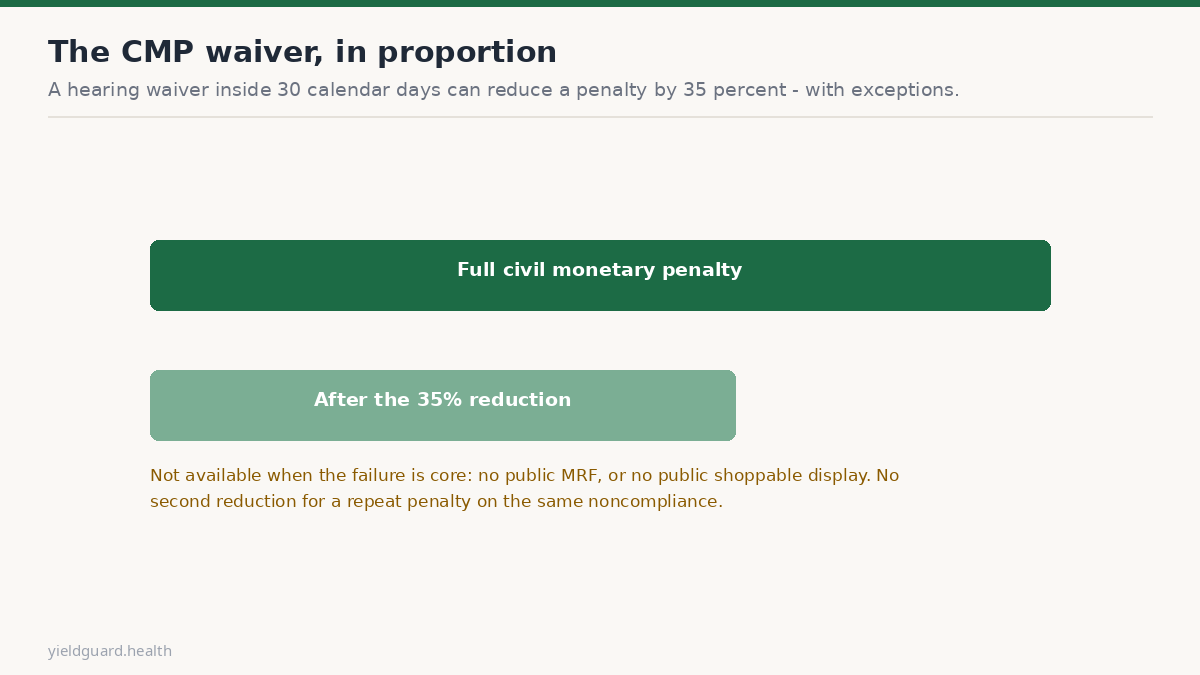
The CY 2026 OPPS/ASC final rule also changed the penalty math. A hospital that waives its right to a hearing within 30 calendar days of a CMP notice can have the penalty reduced by 35 percent - but not for failures at the core of the rule: making no machine-readable file public at all, or making no shoppable services display public.
A clean attestation practice does not replace compliance, but a hospital that reviews before it attests is a hospital that finds its own problems first.
Sources
Related guides
YieldGuard audits hospital machine-readable files against the current CMS requirements. Request Compliance Assessment