Hospital price transparency
Documented attestation mistakes to avoid
The requirement is young, but its design points at the mistakes worth avoiding. Each one is a way to end up with a signed statement the file cannot support.
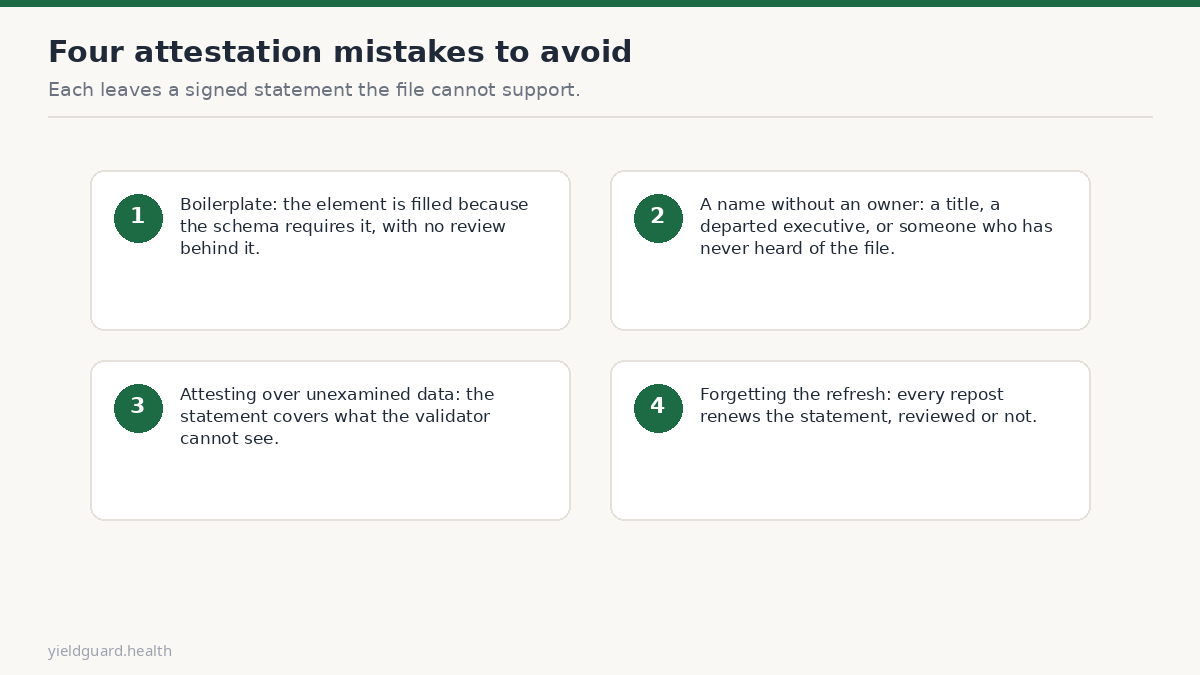
The first is treating the affirmation as boilerplate - pasting the language in because the schema requires the element, without a review that would back it. The element exists so that a person thinks before the file posts; automation that fills it in silently defeats it.
The second is a name without an owner. Encoding a title instead of a person, leaving a departed executive's name in the file, or designating someone who has never heard of the machine-readable file all fail the same test: no one actually stands behind the statement.
The third is attesting over unexamined data. The affirmation covers completeness and derivability, not just format. A file can pass the CMS validator and still lack the fee-schedule detail a percentage charge needs - the statement covers what the validator cannot see.
The fourth is forgetting the refresh. Every reposted file re-makes the statement as of its new date, whether anyone reviewed the data or not.
Sources
Related guides
- Attestation in CMS oversight and enforcement
- Attestation readiness checklist
- What true, accurate and complete commits you to
YieldGuard audits hospital machine-readable files against the current CMS requirements. Request Compliance Assessment